No Fixed Abode: Histories of the Mobile and Itinerant Interior
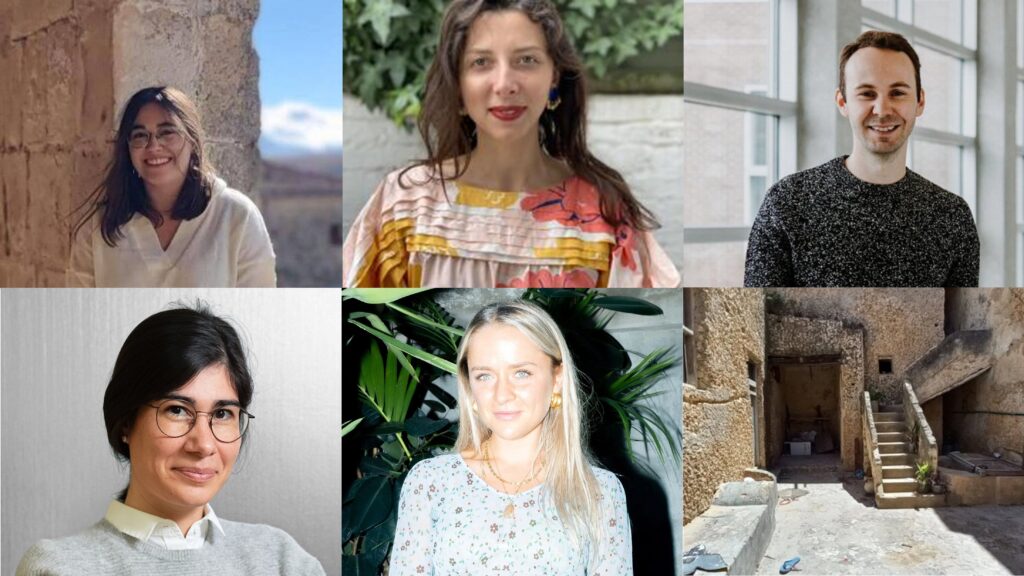
On Wednesday, September 30th, 2026, the SAH-Historic Interiors Group [HIG] Emerging Scholars Committee, led by Charlotte Rottiers and Anna Flinchbaugh, welcomed 30 guests and six guest speakers to the 6th Annual Emerging Scholars online Symposium “No Fixed Abode: Histories of the Mobile and Itinerant Interior.” The event was organized into two sessions with three presentations each. Speakers were emerging scholars drawn from a wide call for paper proposals addressing the theme.
Papers in the first session were collected under the theme Ideal(ised) Interiors: Identity and the Mobile Politics of Display. In “Adorning Mobility: Gender, Jewelry, and Temporary Courtly Interiors in the Age of the Catholic Monarchs,” Isabel Escalera Fernandez examined spectacular jewelry from collections of portable objects carried by Spanish royalty as they moved between temporary residences. Escalera Fernandez explored the premise that the adorned body was an important aspect in reconstituting an environment of courtly regalia in new locations. Dorotea Petrucci’s paper “Minimal clutter, maximum flexibility, and easy mobility: Italian Interiors in the Context of the Colonial Project, 1936-1940” also looked at objects brought to new locations. Petrucci argued that the form and materiality of furniture designed for colonial life in Africa was not just about ease of mobility or other practical demands, but also to showcase the prestige and creativity of Italians abroad. Radu Remus Macovei presented a case study of rural peasant houses turned museum exhibit in his paper “Behind Drawn Curtains: Surveillance and Scandal in the Translocated Interiors of the Open-Air Museum.” Using archival evidence such as documentary exterior photographs as well as police complaints about the villagers hired to occupy the exhibits, Macovei raised questions about the absent interiors that were clearly important to the living museum. The discussion that followed these papers highlighted the importance of bodies – at work, at rest, and on display – for the legibility of historic interiors.
The day’s second session was designated as Making Do, Moving On: Adaptable, Portable and Itinerant Conditions of the Interior. Maria Kouvari’s presentation “Humanitarian Interiors: AERMO’s Emergency Furnishing Package” examined First Aid networks that were expanded to provide domestic living support during the immediate post-WWII years. When barracks became living spaces out of necessity, the concept of the care package and food aid was extended to furniture parceled together as a multi-functional kit of parts. Kouvari suggested that the composition and re-composition of these interior elements over time embodies a sort of interior resilience. Then Bianca Felicori, in her presentation “The Mobile Interior as Sacred Device: Franco Raggi’s Tents and Roulottes,” explored resilience from a different perspective. Felicori analyzed Raggi’s drawings of a portable tent as classical temple, in which the tent/temple front invites entrance but the interior is largely left indeterminate. As a result, enduring concepts of classical architecture are placed in tension with the post-war Italian focus on transportation, mobile living, and domesticity. Also problematizing stable concepts of the interior, shelter, and home, was Gadsiah Ibrahim’s work on the experience of displacement and the interior: “When Home Moves: Domestic Space, Gendered Remaking, and the Ethnography of Absence in Displaced Sudanese Households.” Ibrahim presented a thorough method for examining undocumented, mobile interiors. Depending on oral history, Ibrahim asks what changes when mobility is enforced by violence? Ibrahim argued that the mobile interior is provisional; it is constructed and reconstructed through the material and social production of memory and hospitality. Discussion that followed these papers inquired further into trans-scalar approaches and iterative actions of dismantling and reassembling in the interior.
The symposium’s focus on histories of the mobile and itinerant interior underscored the methodological richness of current work in the field of Interiors Studies. HIG wishes to congratulate the organizers and presenters for a successful event.